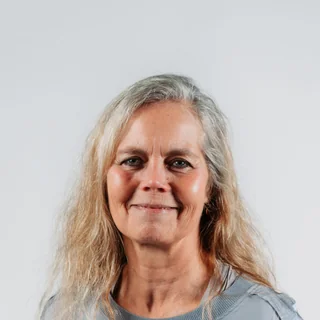
Offshore Medicals is run by Dr Helle Wibe
Seafarer and petroleum doctor with more than 20,000 medical examinations. OEUK-approved since 2006 and approved in Denmark, Norway, the UK and Sweden.
From 1 November 2026 you cannot fly out to an installation on the UK Continental Shelf if you weigh more than 124 kg clothed. Here are the rules, and what Norway and Denmark say about weight.
Offshore Energies UK (OEUK) has introduced a safe weight limit of 124 kg for everyone working on installations on the UK Continental Shelf. The limit is clothed weight, and it is mandatory from 1 November 2026.
If you weigh more than 124 kg at your OEUK medical, no certificate is issued until your weight is below the limit. And if you weigh more than 124 kg at helicopter check-in, you will not travel out, even if your certificate is still valid.
If you take your OEUK medical before 1 November 2026 and weigh more than 124 kg, the certificate will not be valid beyond 1 November 2026.
Book your OEUK Medical
DKK 1,580 incl. VAT, 30-45 min.
Need an appointment today? Call +45 70 60 33 38.
The limit comes from the rescue helicopters. According to OEUK, HM Coastguard cannot guarantee that a person above 124.7 kg can be winched safely from an installation, even in a life-threatening situation. The 124 kg limit includes a margin of 0.7 kg.
OEUK also points out that life rafts, lifeboats, stretchers and descent devices were designed around a lower average weight, and that rescuing a heavy person from a confined space or from height is harder.
Clothed weight means dressed in line with the industry travel clothing policy for the season when you travel.
OEUK has written the limit into its guidelines for examining doctors. This is how weight is handled at the medical:
| Clothed weight at the medical | What happens |
|---|---|
| Above 124 kg | No certificate is issued. It can be issued once your weight is below 124 kg. |
| 120.1 to 124 kg | Reduced-duration certificate, 3 months. It can be reissued after a weight check. |
| 115 to 120 kg | Reduced-duration certificate, 6 months. It can be reissued after a weight check. |
| 110 to 114.9 kg | Normal certificate. You are reminded of the 124 kg limit. |
The 3 and 6 month durations can be extended up to 2 years if you can show the doctor consistent control over your weight.
You are weighed at heliport check-in, as you are today. After 1 November 2026 you will not be allowed on the outbound flight if you weigh 124.1 kg or more clothed, whatever your certificate says.
OEUK itself notes that a standard certificate lasts 2 years, while the implementation period was shorter. So you can hold a valid certificate and still be turned away at check-in. Travelling onshore from the installation is not subject to the limit.
According to OEUK, employers must adapt their mobilisation procedures so that workers close to the limit are reminded to check their weight before going to the heliport. OEUK also recommends that employers offer weight loss support.
Norway has no fixed kilogram limit in its rules. The Norwegian health requirements regulation says there must be no overweight that is a safety risk in an emergency.
The County Governor of Rogaland (Statsforvalteren) states that the petroleum doctor must take action at a BMI above 35, and that a weight above 120 kg or a waist above 115 cm can be a safety problem. The doctor makes an individual assessment.
Seafarers are covered by the Danish Maritime Authority's order on medical examinations. With a BMI above 40, the maritime doctor must assess specifically whether you can manage routine and safety-critical tasks on board.
The assessment can be supported by a physical test, such as the Chester Step Test, or a simpler test like climbing three to six flights of stairs. A test cannot on its own be the basis for being found unfit, it must be part of an overall assessment. The doctor looks at whether you can, among other things:
The Global Wind Organisation (GWO) sets no weight limit for course participants. The training provider must, however, follow the equipment recommendations and national legislation, so ask your training provider if in doubt.
Sources: OEUK, Industry Safe Weight Limit for Workers on Offshore Installations, Explanatory Note, Issue 2, April 2026; Statsforvalteren i Rogaland, Helseerklæring offshore; Norwegian regulation on health requirements for persons working on petroleum installations offshore; Danish order on medical examination of seafarers and fishermen, BEK no. 1463 of 05/12/2023, section 8 and annex 4; Global Wind Organisation, Is there a weight limit for GWO training?. Read September 2026. This page is practical guidance and does not replace the doctor's assessment on the day.
The limit was introduced by OEUK for the UK Continental Shelf. In Norway the petroleum doctor makes an individual assessment, and the County Governor of Rogaland mentions a BMI above 35, weight above 120 kg and waist above 115 cm. On Danish ships the maritime doctor must assess you specifically at a BMI above 40.
Yes. After 1 November 2026 everyone is weighed at check-in, and if you weigh more than 124 kg clothed you will not travel out, whatever the expiry date on your certificate.
Yes. The limit is clothed weight, dressed in line with the industry travel clothing policy for the season.
No. According to OEUK, travelling onshore from the installation is not covered.
Seafarer and petroleum doctor with more than 20,000 medical examinations. OEUK-approved since 2006 and approved in Denmark, Norway, the UK and Sweden.